Why St. Petersburg Sandy Lots Are Tough on Retaining Walls
If you own property in St. Petersburg, you already know that our sandy soil is part of what makes this area beautiful. It drains quickly after a summer downpour, and it supports the lush tropical landscaping that so many homeowners love. But that same loose, granular soil is one of the biggest reasons retaining walls fail here. Unlike the dense clay found in other parts of the country, sand does not hold together well. It shifts, migrates, and loses compaction over time, especially when it gets saturated during hurricane season.
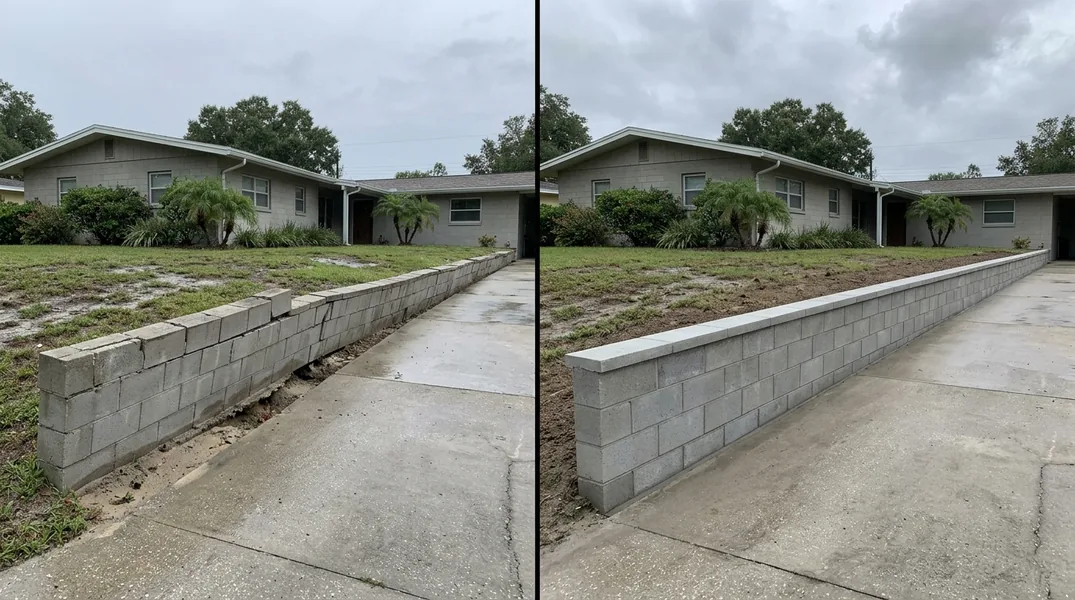
When a retaining wall is built on sandy lots without proper engineering, the soil behind it can slowly creep and push against the wall face. Over months and years, that pressure adds up. Walls that looked perfectly straight at installation can start to lean, bow, or crack. At St. Petersburg Retaining Wall, we see this pattern constantly, and it is almost always preventable with the right design and installation methods. The key is understanding how sand behaves under load and building a wall that can handle the movement without giving way.
The Warning Signs of a Failing Retaining Wall
A failing retaining wall rarely collapses without warning. In most cases, the wall gives you clues for months before it becomes a real hazard. The most common sign is a leaning retaining wall. If you notice the top of the wall tilting outward, even slightly, that is a red flag. It usually means the soil behind the wall is pushing harder than the wall can resist, often because the drainage system is clogged or the base was not set deep enough. Another clear indicator is a bowing retaining wall, where the middle of the wall bulges outward. Bowing typically happens when the wall panels or blocks are too thin for the soil pressure, or when water has saturated the backfill and added extra weight.
Cracks are another warning sign you should never ignore. Hairline cracks in concrete can be cosmetic, but wider cracks that run vertically or diagonally often mean the wall is moving. You should also watch for soil settling at the base of the wall, which can create gaps that let water pour in during storms. If you see any of these issues, it is worth getting a professional opinion before the problem gets worse. A failing retaining wall can damage your landscaping, your driveway, or even your home's foundation if it is close enough. Spotting the signs early makes a Retaining Wall Repair project far more affordable than a full rebuild.
How Sandy Soil and Poor Drainage Cause Walls to Fail
The number one killer of retaining walls in St. Petersburg is water. Sandy soil drains fast, but when the soil behind a wall becomes compacted or clogged with sediment, water cannot escape. During a heavy rainstorm, that water builds up behind the wall and adds tremendous pressure. Most retaining walls are designed to handle the weight of soil, but they are not designed to hold back a swimming pool of water. If the drainage gravel and weep holes are not working, the wall will eventually lean or bow. This is why proper drainage is just as important as the wall itself.
Another issue is that sandy soil can wash out from under the wall's base. When the base loses support, the wall settles unevenly, which leads to cracks and tilting. In some cases, the original installer did not dig deep enough to reach stable soil or did not compact the base properly. Over time, the wall shifts. If you are seeing these problems, a professional assessment can determine whether a repair is enough or whether a Retaining Wall Replacement is the smarter long-term investment. Rebuilding with proper drainage and deeper footings is often the only way to stop the cycle of failure.
Retaining Wall Repair Near Me: When to Call a Professional
If you are searching for retaining wall repair near me in St. Petersburg, you are probably already seeing the warning signs. The question is whether you should try to patch it yourself or call a pro. Small cosmetic cracks can sometimes be sealed, but structural issues like leaning, bowing, or settling almost always require professional help. A contractor can evaluate the wall's drainage, base, and structural integrity, then recommend the right fix. In many cases, a targeted repair can extend the life of your wall for years, but only if the underlying cause is addressed.
At St. Petersburg Retaining Wall, we specialize in diagnosing and fixing failing walls on sandy lots. We can tell you whether your wall needs a simple drainage correction, a partial rebuild, or a full replacement. We also offer Concrete Retaining Walls that are engineered for our local soil conditions. If you are in Clearwater, Largo, or Dunedin, we serve those areas too. The sooner you call, the more options you have. A wall that is caught early is almost always cheaper to fix than one that has already collapsed.
Preventing Future Failures: What a Proper Installation Looks Like
The best way to avoid a failing retaining wall is to have it installed correctly the first time. On sandy lots, that means digging a base that reaches stable soil, using proper compaction, and installing a drainage system that includes gravel, filter fabric, and weep holes. It also means choosing the right wall material for the load. Concrete walls, for example, are heavier and more resistant to soil pressure than some block systems, which makes them a smart choice for taller walls or walls holding back significant grade changes. A professional Retaining Wall Installation should also account for local stormwater patterns and the specific slope of your lot.
If you are planning a new wall or replacing an old one, ask about the pricing upfront so you can budget for a proper build. A wall that is installed with the right materials and drainage will last decades, even in our sandy soil. If you are not sure what your property needs, reach out for a free estimate. We will inspect your lot, explain your options, and give you a clear plan to protect your landscape. Call St. Petersburg Retaining Wall at (727) 295-2091 to get started.
Looking for a professional retaining wall contractor in St. Petersburg? St. Petersburg Retaining Wall responds fast for all your retaining wall needs.
Get a Free QuoteOur services: Retaining Wall Installation · Retaining Wall Repair · Retaining Wall Replacement