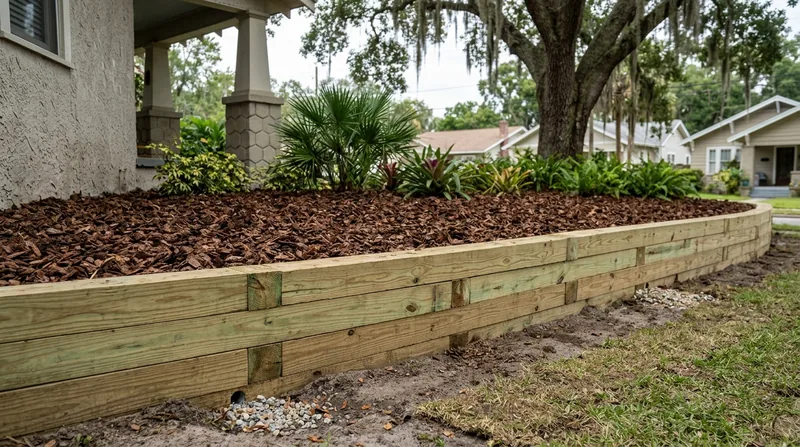




If you are planning Timber Retaining Walls in St. Petersburg, you are working on flat sandy ground where a wall is usually holding a raised bed, a low terrace, or a grade change between neighbors. St. Petersburg sits on the low Pinellas peninsula between Tampa Bay and the Gulf of Mexico, and most lots here are only a few feet above sea level. Real slopes show up in a few places: the Booker Creek ravine in Historic Roser Park, the higher ridge through Crescent Heights and Allendale, and the waterfront bluffs over toward Dunedin and Belleair. Everywhere else, timber walls are built for garden beds, driveway edges, and small terraces. Pressure-treated timber is the budget-friendly choice, and we tell you straight when Florida heat, humidity, and termites will shorten its life and when block is the smarter call. If your existing wall is already leaning or collapsing, start with leaning and collapsed wall repair before you think about new timber.
Why Timber Walls Fail Fast in St. Petersburg Heat, Sand, and Termites
St. Petersburg's climate is hard on wood. Summer humidity sits high for months, the ground stays warm, and the fine sandy soil drains fast but washes out through open joints. Subterranean termites are active year-round in Pinellas County, and pressure-treated pine is not a forever material here. The failure mode that dominates in this city is rot at the ground line and termite damage in the buried courses, not frost heave.
- Termites and moisture attack the bottom courses first, so the wall hollows out from the base.
- Summer downpours push sandy backfill through the gaps and leave voids behind the timber.
- Hurricane-season surge and heavy rain saturate the soil and add pressure the wall was never sized for.
- Walls built without gravel and filter fabric clog, bulge, and start to lean within a few seasons.
We inspect the base and the drainage before we quote any timber work, because a wall that is already rotting at the footing is a replacement job, not a repair.
Key info: In Shore Acres and Lakewood Estates, many timber walls built in the 1990s are now soft at the bottom two courses. We can usually tell from a 10-minute walkaround whether the wall can be rebuilt in timber or should move to block.
Before any wall goes in, check the permit threshold with the City of St. Petersburg's construction services office, since walls over roughly 4 feet from the footing or walls carrying a driveway or structure often need a permit and engineered drawings. You can start with the city's construction services department.
How We Build a Timber Wall That Lasts in St. Petersburg
We build timber walls the same way every time, whether it is a 2-foot garden bed in Kenwood or a 3-foot terrace on Snell Isle. The steps below are what you should expect on site, and they are the difference between a wall that lasts 8 years and one that lasts 15.
- We mark the wall line and call 811 so utilities are located before we dig.
- We excavate to a level footing and compact a gravel base, because sandy St. Petersburg soil needs a stable pad.
- We set the first course below grade on a gravel bed and check level every board.
- We install filter fabric and a gravel drainage column behind the wall to move water away from the timber.
- We tie the courses with deadmen or geogrid where the wall holds a surcharge or a raised bed.
- We backfill in lifts and compact, then cap the top course to shed rain.
If your lot has a real grade change, we may recommend slope stabilization and erosion control instead of a single timber wall, because timber alone will not hold a steep sandy bank.
Local example: On a raised lot in Crescent Heights, we replaced a rotted 3-foot timber wall with a drained timber terrace and a gravel column behind it. The homeowner kept the budget they wanted, and the wall now sheds water instead of trapping it.
Timber Wall Approaches We Use in St. Petersburg
Not every timber job is the same. The table below shows the approaches we use most in St. Petersburg and what each one is best for.
| Approach | Description | Best for |
|---|---|---|
| Pressure-treated timber wall | 4x6 or 6x6 treated timbers, gravel base, filter fabric, and a gravel drainage column. | Garden beds, low terraces, and budget-conscious grade changes under 3 feet. |
| Timber wall with deadmen | Timbers tied back into the hillside with deadmen or geogrid to resist overturning. | Walls holding a surcharge, a driveway edge, or a raised planting bed. |
| Tiered timber terrace | Two or three short timber walls stepped back with planted beds between them. | Lots in Crescent Heights and Allendale with a real grade to work with. |
| Timber to block conversion | Removing rotted timber and rebuilding the wall in segmental block with proper drainage. | Walls over 3 feet, walls near a structure, and any wall that has already failed once. |
We will tell you when timber is the right call and when it is not. On a 2-foot garden bed, timber is fine. On a 4-foot wall holding a pool deck, block is the better investment.
Timber Retaining Walls Cost in St. Petersburg: What to Expect
Timber is the least expensive wall material we install, and most St. Petersburg timber projects start around $20 per square foot of wall face. That figure covers the timbers, gravel base, filter fabric, drainage gravel, and labor. It does not cover removing an old wall, hauling off debris, or fixing a failed grade behind the wall.
Several things move the price. Access is the big one: a wall you can reach with a wheelbarrow costs less than one behind a pool cage on Snell Isle. Height matters too, because walls over 3 feet need deadmen or geogrid and often a permit. Termite damage and rot add removal time. So does a wall that has to be rebuilt after a failed drainage system.
Get two or three written estimates and compare what is included, not just the bottom line. A cheap quote that skips the gravel drainage column will cost you more in five years. Our full pricing overview breaks down how we build a quote.
Hiring a Timber Retaining Wall Contractor Near Me in St. Petersburg
Timber walls look simple, but the details decide how long they last. When you are comparing contractors near St. Petersburg, ask the same questions of every one of them and compare the answers side by side.
- Ask for proof of insurance and confirm the crew is covered before work starts.
- Request two or three local references and actually call them, ideally from the last 12 months.
- Ask who pulls the permit if your wall is over 4 feet or holds a driveway or structure.
- Confirm they call 811 before digging, especially on older lots with unmarked utilities.
- Get the drainage detail in writing: gravel, filter fabric, and where the water goes.
We are fully insured, and we will show you the certificate before we start. If you want a straight answer on whether timber or block makes more sense on your lot, contact us for a free estimate and we will walk the property with you.
Timber Retaining Walls in St. Petersburg: Pricing Guide
| Service | Price | Details |
|---|---|---|
| Low timber garden wall (under 2 ft) | Starting at $20/sq ft | Includes treated timbers, gravel base, filter fabric, and drainage gravel behind the wall. |
| Timber wall with deadmen or geogrid | Starting at $28/sq ft | Adds tiebacks and geogrid for walls holding a surcharge, driveway edge, or raised bed. |
| Tiered timber terrace | Starting at $32/sq ft | Two or three stepped walls with planted beds, priced by total wall face and access. |
| Timber to block conversion | On estimate | Removal of rotted timber, new block wall, and drainage needs an on-site look first. |
| Travel | Included | in St. Petersburg and surrounding areas, no separate call-out or mileage fee |
| Estimate | Free | Response within 24h at (727) 295-2091, no obligation to book |
Indicative pricing, the exact cost depends on square footage, finish, and site access. Free personalized estimate within 24h at (727) 295-2091.


