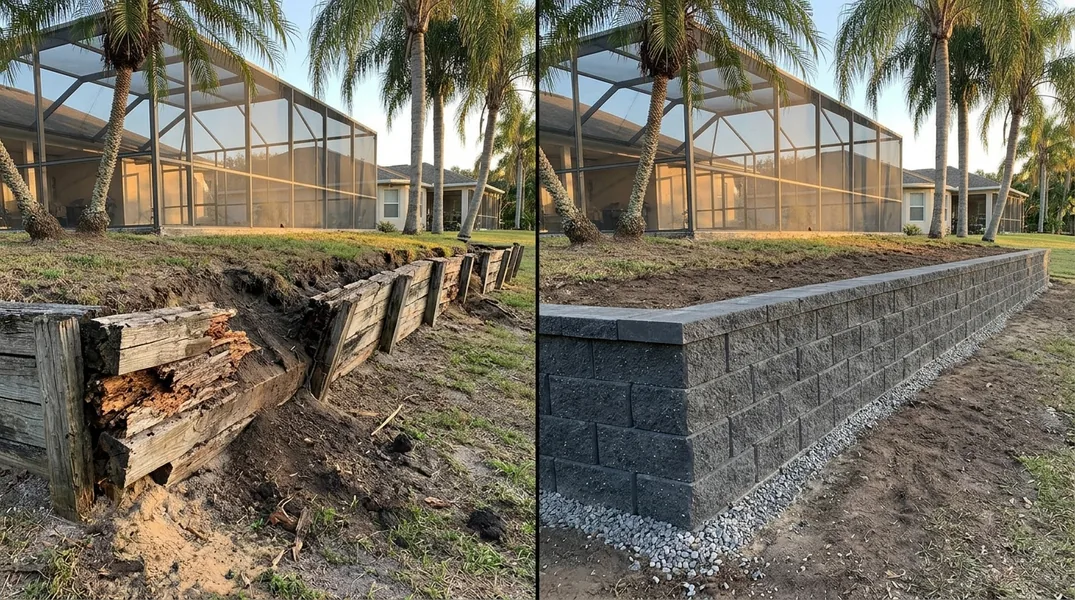
Why Tampa Bay's Rainy Season Is So Hard on Retaining Walls
If you live in St. Petersburg, you already know the drill: from June through September, the sky can open up without warning and drop inches of rain in under an hour. That pattern is brutal on retaining walls. Unlike a gentle, all-day soaking, Tampa Bay storms deliver water fast, and the soil behind your wall can only absorb so much before it becomes saturated.
When that happens, the water has to go somewhere. If your wall was built without proper drainage, it goes straight into the backfill, where it builds up pressure against the wall face. This is the root cause of most retaining wall failures we see in the area, and it is almost always preventable with the right design and materials. Homeowners in nearby Clearwater and Largo face the same conditions, which is why local expertise matters when you plan a wall.
What Hydrostatic Pressure Actually Does to a Wall
Hydrostatic pressure is the force exerted by standing or trapped water. In a retaining wall, saturated soil behaves almost like a liquid, pushing outward against the wall with tremendous force. A wall that was designed to hold back dry soil may suddenly be holding back thousands of pounds of waterlogged earth. The result is often visible: bulging, leaning, cracking, or separation at the joints.
Over time, hydrostatic pressure can undermine the wall's foundation, causing it to settle unevenly or rotate forward. Once a wall starts to move, the problem accelerates. Water finds the new cracks, saturates the soil further, and the cycle repeats until the wall fails completely. This is why Retaining Wall Repair should never be limited to patching the visible damage. The drainage system behind the wall has to be addressed, or the repair will not last through the next storm season.
The Role of a Retaining Wall French Drain
A retaining wall french drain is the most reliable way to manage water behind a wall. It typically consists of a perforated pipe wrapped in filter fabric and set in a bed of gravel at the base of the wall, along with a drainage layer of gravel or crushed stone behind the wall face. When groundwater rises, it enters the pipe and is carried away from the wall instead of pressing against it.
Weep holes alone are not enough. They can clog with soil and fines, and they do not move water quickly enough during a heavy downpour. A properly designed french drain, combined with a gravel backfill and filter fabric to keep soil out of the system, gives water a fast, reliable path away from the wall. If you are planning new Retaining Wall Installation, insist that drainage be part of the plan from day one, not an afterthought.
Signs Your Wall's Drainage Is Failing
Homeowners often miss the early warning signs because they appear gradually. Look for water pooling at the base of the wall after storms, soil washing out from behind the wall, or a white chalky residue (efflorescence) on the wall face. Bulging or leaning sections, cracks that widen over time, and doors or gates that suddenly stick near the wall are also red flags.
In Dunedin and across Pinellas County, we frequently see walls that looked fine in the dry season develop serious problems after a few weeks of afternoon storms. If you notice any of these signs, do not wait. A wall that is still standing but showing distress can often be repaired, while a collapsed wall usually requires Retaining Wall Replacement. Catching the problem early saves money and disruption.
Retaining Wall Drainage Near Me: When to Call a Professional
Some drainage fixes are straightforward, but diagnosing why a wall is failing requires experience with local soils, water tables, and storm patterns. If your wall is showing movement, cracking, or persistent moisture problems, it is time to bring in a professional. A proper assessment includes checking the wall's structural condition, evaluating the existing drainage, and recommending the right fix for your specific site.
At St. Petersburg Retaining Wall, we specialize in Concrete Retaining Walls and drainage systems built for Florida's rainy season. Whether you need a new wall with a proper french drain or a repair that finally solves the underlying water problem, we can help. Call us at (727) 295-2091 to schedule a free estimate, and we will walk you through your options and pricing before any work begins.
Looking for a professional retaining wall contractor in St. Petersburg? St. Petersburg Retaining Wall responds fast for all your retaining wall needs.
Get a Free QuoteOur services: Retaining Wall Installation · Retaining Wall Repair · Retaining Wall Replacement